Storm Damage Roof Repair: What to Do After Severe Weather
When a storm barrels through, your roof takes the brunt. Water leaks. Missing shingles. Heavy debris. The aftermath leaves you feeling exposed, a bit rattled, and with big questions about what to do next.
At Rane Roofing & Gutters, we’ve seen roofs after hurricanes, tornadoes, blizzards, and hailstorms. We know how quickly a small leak can turn into a big headache. Here’s how to take control, protect your property, and restore peace of mind.
First Steps After a Storm
Storms don’t play favorites. Whether you’re a homeowner or run a business, the steps are the same.
- Stay safe first. Before you even think about climbing a ladder, check for obvious hazards—downed power lines, sharp debris, sagging ceilings.
- Don’t rush outside. Wait until the worst has passed and emergency alerts are lifted.
- Look for visible damage: Shingles on the ground, gutters hanging loose, leaks inside, or even daylight peeking through your attic.
Wind rips. Hail hammers. Debris crashes down like a sack of bricks. Each leaves its mark in a different way.
Wind Damage: Shingles can peel away like old wallpaper. Roof edges and ridges are most vulnerable.
Hail Damage: It’s like your roof was pelted with marbles. Look for dings, bruised shingles, and granules in your gutters.
Fallen Debris: Branches, limbs, or even entire trees can punch holes or crush sections.
Leaks: Water stains on ceilings, drips, or puddles near walls are a red flag. Even a small leak can quickly rot wood and insulation.
Quick Safety Checklist 🛑
- Don’t climb on the roof. Wet, damaged surfaces are slippery and unstable.
- Shut off utilities if you see water near outlets or wiring.
- Keep kids and pets away from damaged areas.
- Use a flashlight (not candles) to inspect attic or interior.
- Wear sturdy shoes and gloves if you must move debris.
- Document everything before making any changes.
If you smell gas, hear popping from electrical panels, or see sparking wires, call emergency services—don’t try to fix it yourself.
How to Document Damage
Think of your phone as your best tool right now. Documentation is your shield if you need to file an insurance claim.
- Take wide shots of your entire roof and property.
- Zoom in on specific damage—missing shingles, dents, broken gutters, exposed decking, water stains.
- Photograph both inside and out. Don’t forget attics, ceilings, and walls.
- Date-stamp your photos if possible.
- Keep a written list of what you see and when.
If you spot Chimney Flashing near you that’s bent or peeling, snap a photo. Gutters overflowing with granules? Document that too.
Temporary Protection Measures ⏳
Sometimes, quick action can save thousands in later repairs.
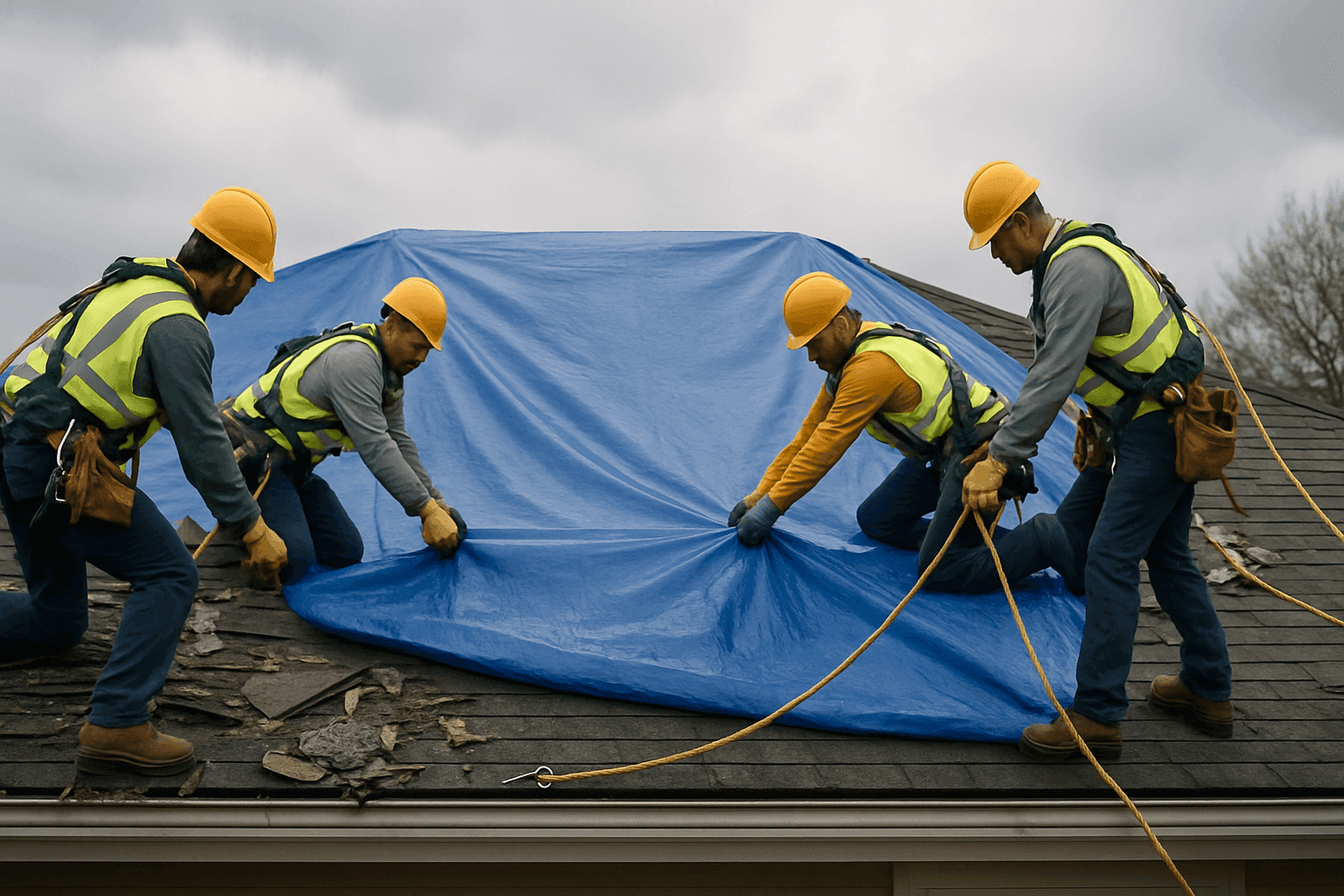
- Tarp exposed roof sections. Secure with sturdy boards or sandbags—never nails if you can avoid it.
- Catch leaks with buckets or pans. Place towels on the floor to soak up water.
- Cover broken windows or skylights with plastic sheeting and tape.
- Clear clogged gutters if it’s safe—standing water can add weight and cause further damage.
Don’t attempt large repairs alone. Remember, even a small slip can lead to injury.
Filing Insurance Claims
Roof damage from storms is stressful, but the right documentation makes a difference.
- Contact your insurance company as soon as it’s safe.
- Provide photos and a written account of the damage.
- Keep receipts for any emergency repairs or materials (tarps, boards, etc.).
- Don’t discard damaged materials until your adjuster has seen them.
- Ask your insurer about approved emergency roofing services—they may have preferred vendors.
A licensed, insured company like Rane Roofing & Gutters can help you understand what’s covered, provide written assessments, and work alongside your adjuster.
DIY vs. Call a Pro
It’s tempting to grab a ladder and fix things yourself. But storm-damaged roofs are unpredictable.
DIY:
- Safe to clear small debris from your yard.
- You can place buckets under leaks or lay towels.
- Taping plastic over minor window cracks is okay.
Call a Pro:
- If you see structural sagging, big leaks, or exposed wood.
- When shingles, flashing, or gutters are missing.
- If you spot water in your electrical panel.
- For Chimney Flashing or skylight repair near you—these need precision.
Roofers arrive with safety equipment, proper materials, and knowledge of regional building codes (like those from the International Code Council or OSHA guidelines).
What Pros Do On Arrival 👷
A licensed emergency roofing team moves with purpose, not panic.
- Initial safety check. Ensuring the site is secure for you and workers.
- Thorough inspection. Inside and out, including decking, flashing, gutters, and attic spaces.
- Immediate temporary fixes. Tarping, sealing, or boarding up holes.
- Detailed documentation. Photos, notes, and recommendations for insurance.
- Plan for repairs. Materials, timelines, and coordination with adjusters.
Professional teams can spot hidden damage—like wet insulation or hairline cracks—before they become major problems.
Prevention & Maintenance
You can’t control the weather, but you can stack the odds in your favor.
- Schedule regular inspections. Once a year, and after major storms.
- Trim back overhanging branches. Less risk from falling debris.
- Keep gutters and downspouts clear. Prevents water buildup and roof rot.
- Check Chimney Flashing and roof edges. These are common leak points.
- Upgrade to impact-rated shingles or metal roofing if you live in a hail- or hurricane-prone area.
Routine gutter cleaning and preventative maintenance from a qualified team extends roof life and protects your investment.
Costs & Time Factors
Storm repairs aren’t one-size-fits-all. Here’s what to expect:
- Minor repairs: A few missing shingles or minor leaks can often be patched in a day.
- Major repairs: Structural damage or large leaks may take several days.
- Total replacement: Severe cases—like after a tornado or hurricane—can take a week or more, depending on weather and material availability.
Cost drivers:
- Extent and type of damage (hail, wind, debris, leaks).
- Roof material (shingle, tile, metal, flat).
- Accessibility and size of your property.
- Emergency roofing response time and labor.
Insurance may help cover much of the cost, but you’ll want detailed documentation and estimates from a licensed, insured contractor.
When It’s an Emergency 🚨
Certain situations can’t wait:
- Water pouring in or pooling rapidly.
- Large sections of roof missing or collapsed.
- Exposed wiring or structural beams.
- Multiple leaks during heavy rain or snowmelt.
- Blocked or broken gutters causing overflow into the building.
Don’t wait for things to get worse. Emergency roofing teams, like Rane Roofing & Gutters, respond 24/7 to secure your home or business and begin repairs.
FAQ
How soon should I call for emergency roofing help?
As soon as it’s safe to do so. The faster an emergency team arrives, the less chance of further water or structural damage.
Will my insurance cover storm repairs?
Most policies cover sudden, storm-related roof damage. Check your policy and document everything for your claim.
Can I stay in my home during repairs?
For minor repairs, usually yes. Major damage—like structural compromise or exposed electrical—may require temporary relocation.
Do I need a permit for emergency roof repairs?
Typically, emergency tarping and temporary fixes don’t require a permit. Full repairs may, depending on your location and the scope of work. Your roofing contractor should know local regulations.
Local and Seasonal Considerations
Every region has its own weather personality.
- Hurricanes: Batten down hatches, check for wind-driven leaks, and inspect after every major event.
- Tornadoes: Watch for flying debris and shingle loss—roofs on the tornado’s path take the worst.
- Blizzards/Ice Storms: Heavy snow loads can cause sagging and leaks. Ice dams block gutters and force water under shingles.
- Hail: Even small hail can bruise or break shingles, leading to hidden leaks.
If your area gets regular storms, consider upgrades like impact-resistant shingles, reinforced decking, and annual professional inspections.
The storm has passed, but peace of mind is just a call away. For emergency roofing, leak repair, Chimney Flashing near you, or storm recovery, Rane Roofing & Gutters is licensed, insured, and ready to help—day or night.
Call Rane Roofing & Gutters now — or reach us anytime at 888-984-8044 .