Flat Roofs vs. Pitched Roofs: Pros, Cons & Best Uses
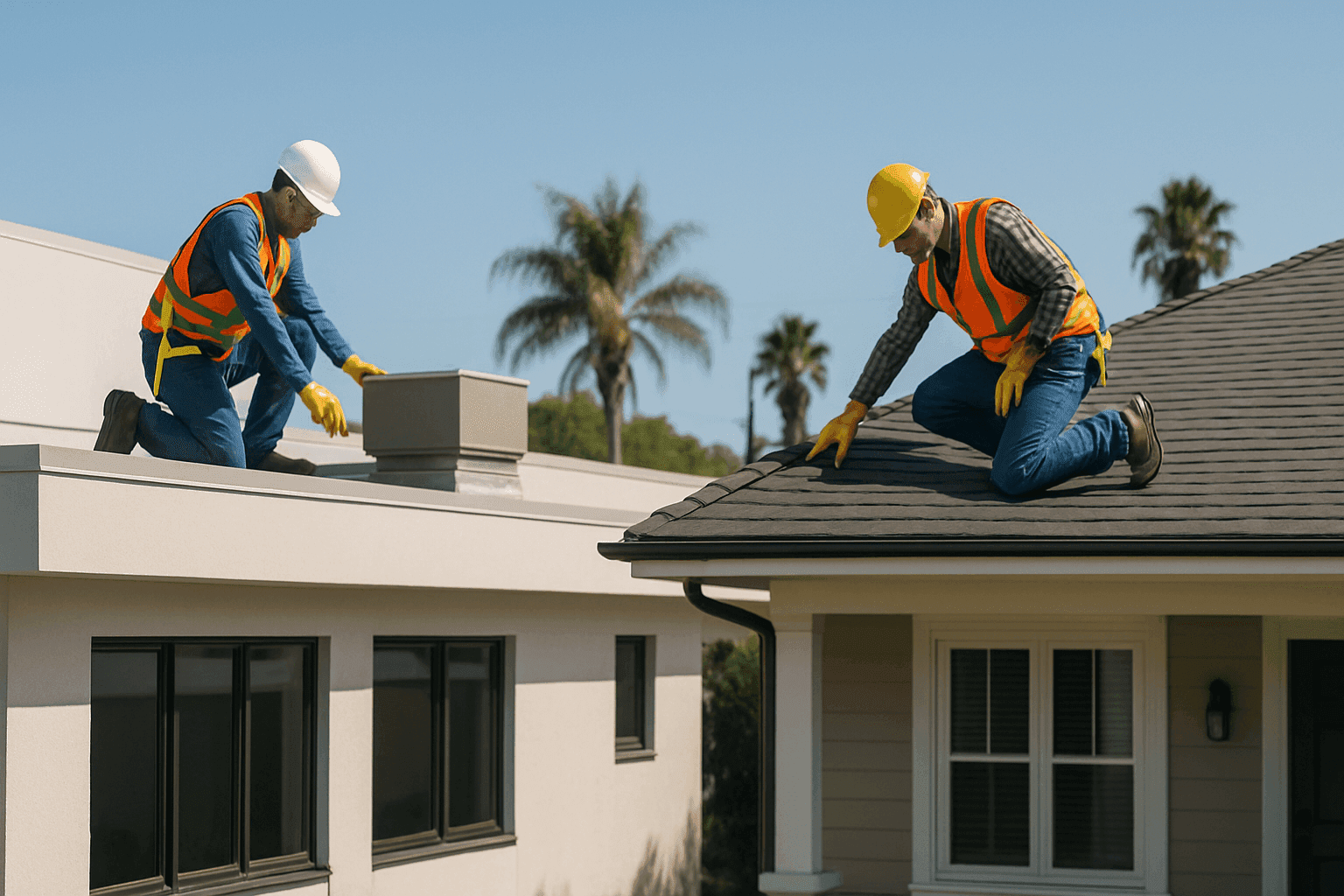
When the skies open up and water pours down, your roof is your shield. Choosing the right type isn’t just about curb appeal—it’s about safety, budgets, and long-term peace of mind. At Rane Roofing & Gutters, we’ve climbed, patched, and rebuilt every style, from the flattest commercial roofs to classic pitched peaks on family homes.
But which roof style stands up best—to storms, to leaks, to time itself? Let’s break it down, side by side, with clarity and real-world wisdom.
What Is a Flat Roof? 🏢
A flat roof isn’t perfectly flat. Think of it as a pancake with a subtle tilt—usually 1/4 inch per foot—to let rainwater trickle off. You’ll spot these on warehouses, schools, apartment blocks, and modern homes chasing that sleek, minimalist look.
Flat roofs are built using:
- Single-ply membranes (like TPO or EPDM)
- Built-up layers of asphalt and tar
- Modern coatings or eco-friendly “green” roofing
Why flat?
- Easier and faster to install on big buildings
- Offers usable space for HVAC, solar panels, or even rooftop gardens
- Simple, cost-effective repairs (in many cases)
But beware: water doesn’t run off as quickly. Puddles can form. That makes proper installation—by pros who know local building codes—absolutely crucial.
What Is a Pitched Roof? 🏠
Picture a classic storybook home, snow sliding off, rain racing down. That’s a pitched roof in action. Steep angles, shingle layers, and strong beams create a triangle that shrugs off weather.
Pitched roofs use materials like:
- Asphalt shingles (America’s favorite)
- Clay or concrete tiles
- Metal panels
- Wood shakes or slate for a historic look
Why pitched?
- Natural drainage—water, snow, and debris slide right off
- Generally longer lifespan (when well maintained)
- Timeless look that suits many neighborhoods
The steeper the pitch, the better for heavy snow and rain. But installation can be trickier and pricier, especially on complex rooflines.
Comparative Pros & Cons
Let’s put these two roof types head-to-head. Each shines in its own arena.
Flat Roofs:
- Pros:
- Cost-effective for large areas
- Easy access for repairs, inspections, and upgrades
- Maximizes usable space (think rooftop decks or gardens)
- Cons:
- Prone to ponding water if not built or maintained correctly
- Shorter average lifespan (10–25 years, depending on material and care)
- May need more frequent leak checks and emergency roofing intervention
Pitched Roofs:
- Pros:
- Excellent drainage—ideal for rainy or snowy climates
- Typically longer lasting (20–50+ years, with the right shingles or tiles)
- Lower risk of leaks and structural issues when built to code
- Cons:
- More expensive up front, especially on homes with complex shapes
- Harder (and costlier) to inspect or repair
- Usable attic or rooftop space is limited
Cost
- Flat roofs are often less expensive to install for large commercial buildings.
- Pitched roofs, while pricier at first, may save on long-term maintenance and energy bills—especially if well insulated.
Longevity
- Pitched roofs generally outlast flat roofs, especially when weather gets wild.
Maintenance
- Flat roofs need regular inspections, cleaning, and quick repairs—especially around drains, flashing, and seams.
- Pitched roofs require less frequent but sometimes more complex upkeep (think shingle replacement or chimney flashing near you).
Weather Resistance
- Flat roofs are more vulnerable to leaks if drainage is poor.
- Pitched roofs shed water and snow naturally, making them favorite picks in areas with severe weather.
Best Uses for Each Type
Flat Roofs:
- Large commercial buildings and warehouses
- Modern homes with a minimalist or mid-century look
- Rooftop installations (solar, HVAC, gardens)
- Areas with little snow and moderate rainfall
Pitched Roofs:
- Most single-family homes
- Structures in snowy or heavy rainfall regions
- Historic properties or neighborhoods with traditional design
- Residences needing attic space or extra insulation
Decision Matrix: Which Roof Is Right for You?
Let’s make your choice simple. Answer these quick questions:
1. What type of building do you have?
- Residential (house, duplex): Pitched often best, but modern homes can go flat.
- Commercial (store, warehouse): Flat roof is usually practical.
2. What’s your local climate like?
- Heavy snow or rain? Pitched wins.
- Mild, dry, or metro? Flat can work.
3. Is rooftop space important?
- Want a roof deck or garden? Flat is ideal.
- Don’t need extra space? Pitched might last longer.
4. Budget priorities?
- Need to save now? Flat roof.
- Willing to invest for decades? Pitched.
5. Maintenance comfort?
- Ok with regular checks? Flat.
- Prefer “set it and forget it”? Pitched.
Still unsure? Call us for a tailored evaluation based on your building, budget, and weather.
Building Codes & Rane’s Experience
Every city and county has rules about roof slopes, materials, and drainage. The International Building Code (IBC) and International Residential Code (IRC) set baseline standards—like minimum slopes for drainage and fire resistance grades.
At Rane Roofing & Gutters, we stay current on all local and national requirements. Our team has installed, repaired, and replaced both flat and pitched roofs on everything from downtown shops to rural homes. We’ve seen how code compliance prevents headaches, leaks, and emergency roofing calls.
Real-World Tips from the Field
- Inspect twice a year. Spring and fall are ideal—catch small issues before they grow.
- Keep gutters and downspouts clear. Blockages are leak magnets, no matter the roof shape.
- Check flashing and sealants. Especially around chimneys, skylights, and roof edges.
- After storms, look for ponding or missing shingles. Fast action prevents big bills.
Local Weather Impacts 🌦️
Snow, rain, hail—nature tests every roof. Flat roofs can struggle with snow buildup and standing water. Pitched roofs handle runoff well but may lose shingles in high winds.
For properties in hurricane zones, tornado alleys, or areas with wild temperature swings, material choice and installation quality matter even more. Always ask your roofer how they address local weather—insulation, reinforced decking, and proper flashing are your friends.
Maintenance: What It Takes
Flat roofs:
- Sweep off debris monthly
- Inspect for ponding after storms
- Reseal seams and flashing every few years
Pitched roofs:
- Check for damaged or missing shingles after big storms
- Clean gutters each fall
- Inspect attic for leaks or signs of moisture
Emergency Roofing & Leak Repair
Leaks never wait for office hours. At Rane Roofing & Gutters, our emergency roofing team has patched midnight leaks and storm-damaged flashing on both flat and pitched roofs. Fast tarp service, temporary seals, and clear communication are our hallmarks.
Tip: If water is dripping inside, move valuables and put out buckets—then call for help. Never climb onto a damaged roof during a storm.
Quick Quiz: Flat or Pitched—What’s Your Match?
-
Do you want future rooftop projects (garden, solar)?
- Yes: Flat
- No: Pitched
-
Is your building large and commercial?
- Yes: Flat
- No: Pitched
-
Are you in a snowy or rainy region?
- Yes: Pitched
- No: Either
-
Is upfront budget your main concern?
- Yes: Flat
- No: Pitched
Tally your answers. More “Flat”? Consider a flat roof. More “Pitched”? You know what to do.
FAQ
Q: Can a flat roof really last as long as a pitched roof?
A: With modern membranes and routine maintenance, flat roofs can serve well for decades—but pitched roofs generally edge them out on total lifespan.
Q: Is one roof type always cheaper to repair?
A: Flat roofs are easier and quicker for small repairs. But if water damage spreads, costs rise fast.
Q: Do building codes restrict my choice?
A: Some regions require minimum slopes, especially for heavy snow. Always check local codes or ask a pro.
Q: What’s the best roof for solar panels?
A: Both can work, but flat roofs offer easier installation and more flexibility.
In Closing
Whether you own a cozy bungalow or a sprawling commercial property, the right roof protects everything beneath it. Flat or pitched, what matters most is quality installation, smart materials, and regular care.
Questions? Facing leaks or ready for a new roof?
Call Rane Roofing & Gutters now — or reach us anytime at 888-984-8044 .